How to Choose the Best Reusable Nappies for Newborns in 2026
Last Updated: November 14, 2026
Quick Summary
Choose reusable nappies for newborns by prioritising fit over brand: a dedicated newborn size or a fitted nappy plus cover closes around a 3kg baby, while most one-size designs start at roughly 4kg. Plan for 20 to 24 newborn nappies if washing every other day, or 15 to 18 if washing daily.
- Most one-size designs start at roughly 4kg, so they will not sit snugly on a 3kg newborn.
- A starter set of 12 to 15 newborn nappies plus a few covers usually lasts six to eight weeks.
- Newborns need changing roughly 10 to 12 times in 24 hours, so build in a small buffer.
- A cover system needs around 6 to 8 covers alongside 20 fitted nappies.
- Wash every two days at most, starting with a short cool pre-wash before the main wash.
Table of Contents
- Why Newborn Cloth Nappies Need a Different Approach
- Newborn Fit, Sizing and the Birth-to-Potty Question
- Nappy Systems Compared: Pocket, All-in-One and Covers
- Absorbency, Leak Protection and Delicate Skin
- How Many Reusable Nappies Do I Need for a Newborn?
- How to Wash Reusable Nappies Without Wrecking Them
- Total Cost of Ownership: What a Newborn Set Really Costs
- Building Your Newborn Nappy Set with Earthlets
- Frequently Asked Questions
Why Newborn Cloth Nappies Need a Different Approach
Newborn cloth nappies are not simply smaller versions of the nappies you will use at six months. A baby weighing around 3kg has a soft, unset head, a cord stump that needs air, and a tiny frame that most one-size designs were never built around. That is why choosing the best reusable nappies for newborns comes down to fit and frequency rather than brand loyalty. Many parents buy a full one-size set before the baby arrives, then discover the rise is too deep and the legs gape.
Newborn Fit, Sizing and the Birth-to-Potty Question
Birth-to-potty nappies promise one purchase from day one, but most one-size designs start at roughly 4kg. The HappyBear One Size Pocket Nappy is listed as suitable from approximately 4kg to 15kg, which tells you it will not sit snugly on a 3kg newborn. For the early weeks, a dedicated newborn size or a fitted nappy plus a cover gives a closer, safer fit.
Why a 3kg Baby Is a Different Fit Problem
A newborn is not a scaled-down six-month-old. Three things change the geometry of the nappy:
- The cord stump. The front rise has to sit below the stump so air reaches it. On a one-size nappy snapped to its shortest rise, the front panel often rides up over the cord, which rubs and traps moisture. A newborn-size nappy or a folded-down front on a fitted nappy keeps the area clear.
- The leg crease. Newborn legs are short and bent, with very little fat on the thighs. Elastic needs to sit in the crease where the leg meets the bottom, not across the thigh. If the gusset is too deep, the fabric bunches and gaps open at the side; if it is too shallow, the elastic cuts in.
- The waist. A newborn waist is small and soft, and poppers spaced for a 4kg baby will not tighten enough. Velcro or closely spaced poppers give a finer adjustment in the early weeks.
When One-Size Nappies Actually Start to Fit
One-size nappies can begin to sit reliably at different weights depending on the baby's shape, so check the stated weight range rather than assuming. A long, slim baby may fit the shortest rise sooner; a shorter, rounder baby may need the next rise setting for longer. Rather than trusting the stated minimum, test the fit yourself:
- Rise check: with the nappy on, the front should sit below the cord stump and the leg elastic should tuck into the crease with no gap when you run a finger around it.
- Waist check: you should be able to slide two fingers under the waistband, no more. If you can fit a whole hand, it is too loose; if the fabric digs in, it is too tight.
- Bulk check: a thick insert between the legs pushes the fabric away from the body and opens gaps at the legs. In the first month, a slimmer insert or a folded flat is often a better fit than a full pocket insert.
Is a Dedicated Newborn Size Worth It?
For most families, yes, at least a small starter set. A newborn-size nappy is cut shorter in the rise and narrower between the legs, so it closes around a 3kg baby without the bulk of a one-size design. You do not need a full stash: 12 to 15 newborn nappies plus a few covers will usually see you through the first six to eight weeks, after which most babies move into one-size nappies.
What to Check on a Nappy for a 3kg Baby
- Rise depth: the front should sit below the cord stump, not rub it
- Leg gussets: elastic should sit in the crease, with no gaping
- Waist fastening: poppers or Velcro should tighten without bunching
The Rikki Wrap Nappy Cover Cranberry uses Velcro fasteners for an adjustable closure over fitted nappies.
Premature and Low-Birth-Weight Babies
If your baby arrives below about 2.5kg, many one-size nappies will be too large, so check the stated weight range before buying. Check the stated weight range on any newborn nappy before buying, and if your baby is significantly early, speak to your health visitor or neonatal team about what has worked for other families.
Nappy Systems Compared: Pocket, All-in-One and Covers
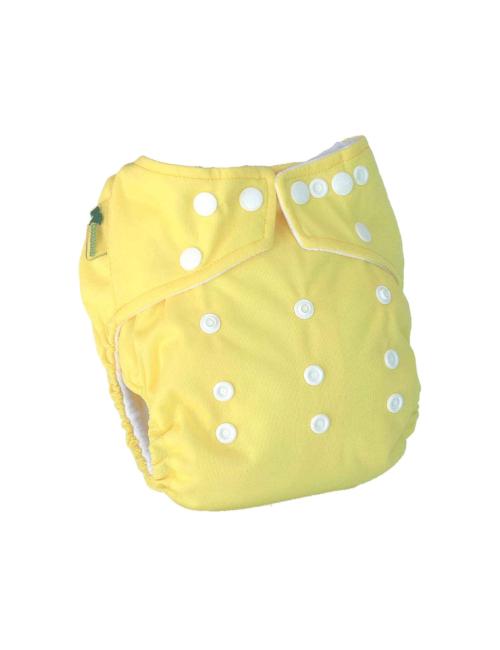
Pocket nappies are the simplest all-in-one nappy route: you stuff the absorbent insert into the pocket, then put the whole thing on. The Little Lamb OneSize Pocket Nappy with Bamboo Boosters comes with two bamboo boosters and a microfleece lining that draws moisture away from the skin. The HappyBear One Size Pocket Nappy includes a four-layer microfibre insert plus a four-layer bamboo insert, and its double gussets are designed to reduce leaks.
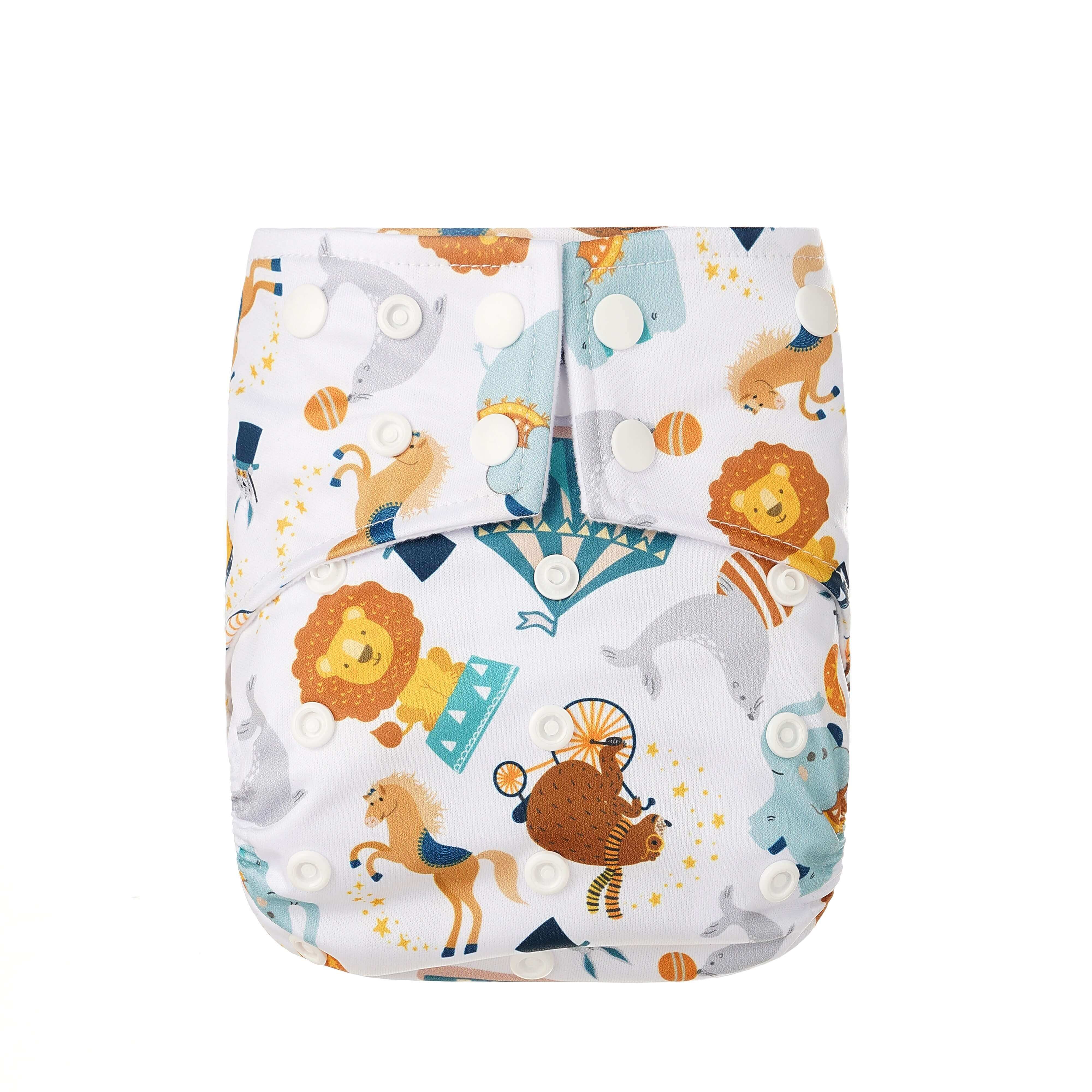
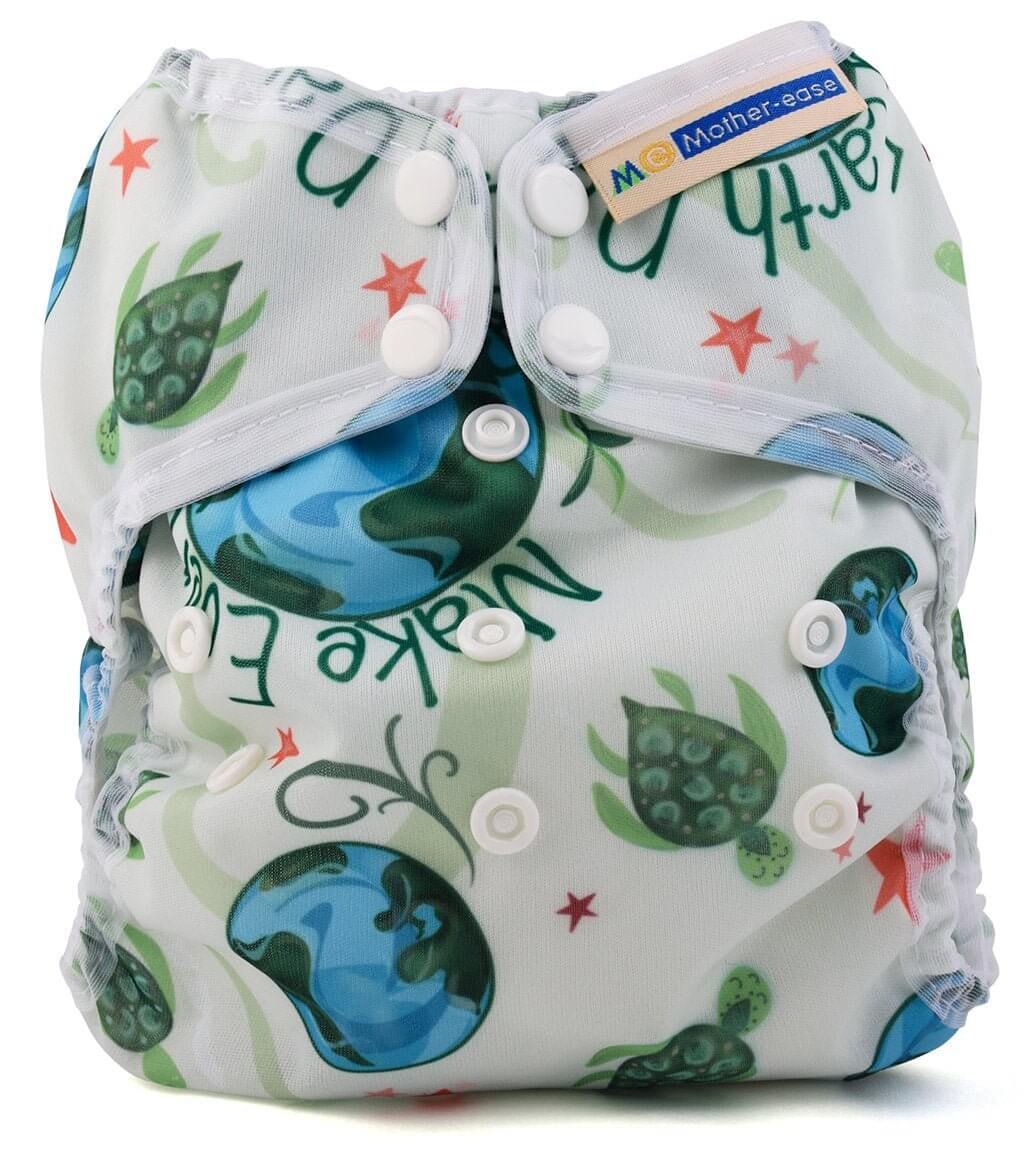
Covers work differently. A waterproof cover goes over a fitted or flat nappy and can be reused several times before washing. The Wizard Duo Waterproof Nappy Cover is built to be reused three to four times between washes because you swap the insert, not the cover.
| System | What You Need | Best For | Wash Frequency |
|---|---|---|---|
| One nappy per change | Simplicity, grandparents, childcare | Every change | |
| All-in-one | One nappy per change | Fastest changes | Every change |
| Cover + fitted | Fewer covers than nappies | Cost, small newborns, nights | Cover every 3-4 uses |
Absorbency, Leak Protection and Delicate Skin
Newborns urinate often but in small amounts, so absorbency matters less than fit in the first month. Most leaks at this stage come from a gap at the leg or a nappy that is simply too big.
For delicate skin, look for a stay-dry lining next to the body and breathable fabrics. The Air Flow Nappy Cover Flight uses a breathable PUL wrap with gaps between the snap closures to improve airflow.
How Many Reusable Nappies Do I Need for a Newborn?
Plan for 20 to 24 newborn nappies if you wash every other day, or 15 to 18 if you wash daily. Newborns need changing roughly 10 to 12 times in 24 hours, so a two-day rotation plus a small buffer covers you (the NHS).
If you use a cover system, you need far fewer covers: around 6 to 8 covers alongside 20 fitted nappies, because each cover lasts three or four changes.
How to Wash Reusable Nappies Without Wrecking Them
Washing reusable nappies is straightforward once you have a routine, and a bad routine is the main reason nappies lose absorbency or smell. Newborns add a twist: you are changing 10 to 12 times a day, the nappies are small, and you may not want to run a full load every day. The routine below is built around that frequency.
Storing Nappies Before Wash Day
- Knock solids into the toilet as soon as you change the nappy. Newborn poo is runny, so most of it will wash out, but removing what you can keeps the bucket manageable.
- Use a dry bucket, not a soaked one. A lidded bucket with a mesh liner lets air circulate and reduces smell. Soaking in water or sterilising solution is unnecessary and can degrade elastic and waterproofing over time.
- Wash every two days at most. Newborn nappies are small, so a two-day interval gives you a sensible load size without letting bacteria build up. If you wash daily, a short cycle is enough; if you stretch to three days, expect more staining and a stronger pre-wash.
The Wash Routine
- Pre-wash: a short cool cycle first to rinse out urine and loosen solids. This step matters more with newborns because the nappies are changed so often and carry a lot of dilute urine.
- Main wash: a longer cycle at 40-60°C with the amount of detergent your machine advises for heavily soiled laundry. Use the full dose, under-dosing is a common cause of lingering smells. Check the care label: bamboo and microfibre tolerate 60°C, but some PUL covers and all-in-ones are better at 40°C.
- Skip fabric softener: it coats fibres and blocks absorbency (How to get fluffy towels). If you use a tumble dryer sheet in other loads, keep it away from nappies for the same reason.
- Extra rinse if needed: if nappies come out stiff or smell once dry, add a rinse cycle. Soft water areas may need less detergent; hard water areas often need more.
- Dry fully: line dry when you can, or tumble on low. Bamboo and microfibre dry faster than thick all-in-ones. Covers and PUL dry in a few hours on a line or airer; thick fitted nappies can take a full day indoors.
Watch out: washing at 30°C with too little detergent is the classic mistake. Nappies come out looking clean but hold onto bacteria, and the smell returns within hours of use.
Drying in a Small Space
If you do not have a garden or a tumble dryer, a heated airer or a drying rack near a radiator works well for covers and pockets. Thick fitted nappies and all-in-ones dry slowest, so keep a rotation of faster-drying pockets or flats for the days when you are waiting on a load. In winter, a dehumidifier in the room where nappies dry speeds things up and reduces condensation.
A Realistic Newborn Washing Schedule
With 20 to 24 newborn nappies and a wash every other day, you will run roughly three to four loads a week: one pre-wash plus one main wash per wash day. That is the time cost behind the cost saving, about three extra wash loads a week compared with disposables, plus drying time. If you use a cover system, covers only need washing every three or four uses, so the load is smaller and dries faster.
Total Cost of Ownership: What a Newborn Set Really Costs
A newborn set costs less than most parents expect. At our listed prices, pocket nappies are £4.99 each and covers are from £2.99, so a set can be built to suit your budget. Compare that with the ongoing cost of disposables over two to three years, and the reusable set pays for itself. The trade-off is your time spent on washing.
Building Your Newborn Nappy Set with Earthlets
Start small and size for the baby in front of you, not the one in the brochure.
At Earthlets, we stock reusable nappies and covers from £2.99, with same-day dispatch Monday to Friday.
Choosing the best reusable nappies for newborns is really a question of fit, quantity and routine.
If you are unsure where to begin, start with a small newborn set rather than a full one-size bundle.
Frequently Asked Questions
Are reusable nappies suitable for newborns?
Yes, but fit is the deciding factor. A newborn needs a nappy that sits snugly around the legs and waist without gaping, so look for a stated weight range that covers your baby's birth weight. The HappyBear One Size Pocket Nappy fits from roughly 4kg to 15kg, so smaller babies may need a dedicated newborn size or a cover system with a smaller rise setting until they reach that range.
How many reusable nappies do I need for a newborn?
Newborns need frequent changes in the first weeks, so plan a rotation that suits how often you wash. If you use a two-part system with covers, you need fewer covers than inserts because a cover can be reused three to four times before washing.
How do you wash reusable nappies?
Scrape solids into the toilet, then follow the care label for washing temperature and detergent. Avoid fabric conditioner, as it can reduce absorbency. Line dry or tumble on low.
What should you look for when buying newborn reusable nappies?
Check four things: a weight range that starts at or below your baby's birth weight, adjustable rise poppers, elasticated leg gussets, and a stay-dry lining next to the skin. Price also matters, since you are buying a full set.